Why you can trust it
The same problem as any reality-capture pipeline: raw sensor data is not yet an answer, and the gap between them is where the work lives.
A scaled 3D skeleton, reconstructed from ordinary 2D video.
Two calibrated cameras can triangulate depth where they both see a joint. One camera can’t see depth at all. No one can see a single moment from every angle.
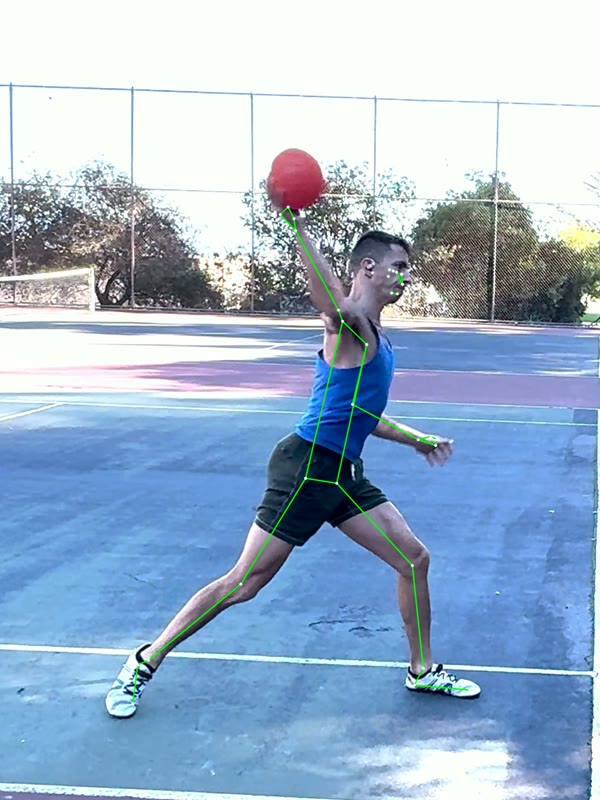
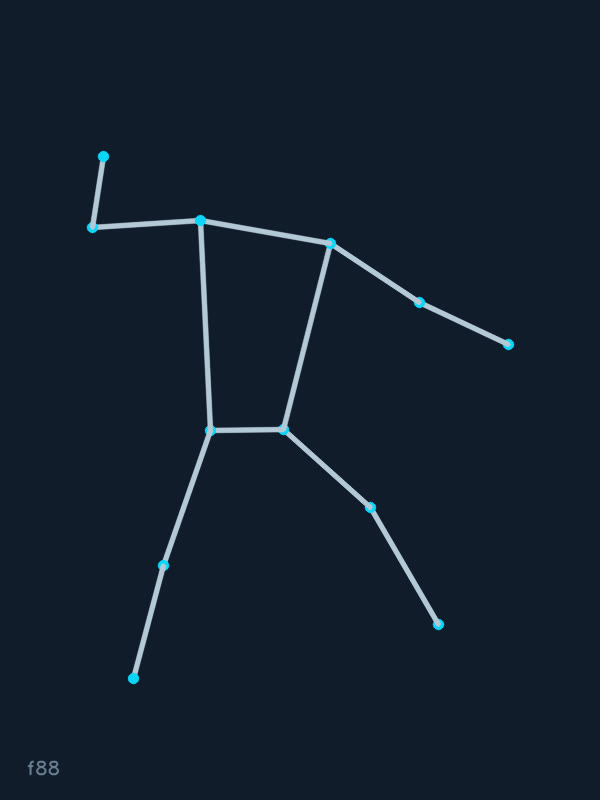
Constrained by a biomechanical model, not smoothed into shape.
The model rules out configurations a human body cannot reach, rather than averaging away the evidence. Clean data and correct data are not the same thing.
Machine produced, human reviewed.
Ambiguous frames get adjudicated by a person, and every measurement carries a record of how it was produced.
Measurement becomes language without the model inventing anything.
Skill priority and drill selection are decided in code. The language model writes the prose and is never handed a number it could get wrong.
Objective assessment of core skills
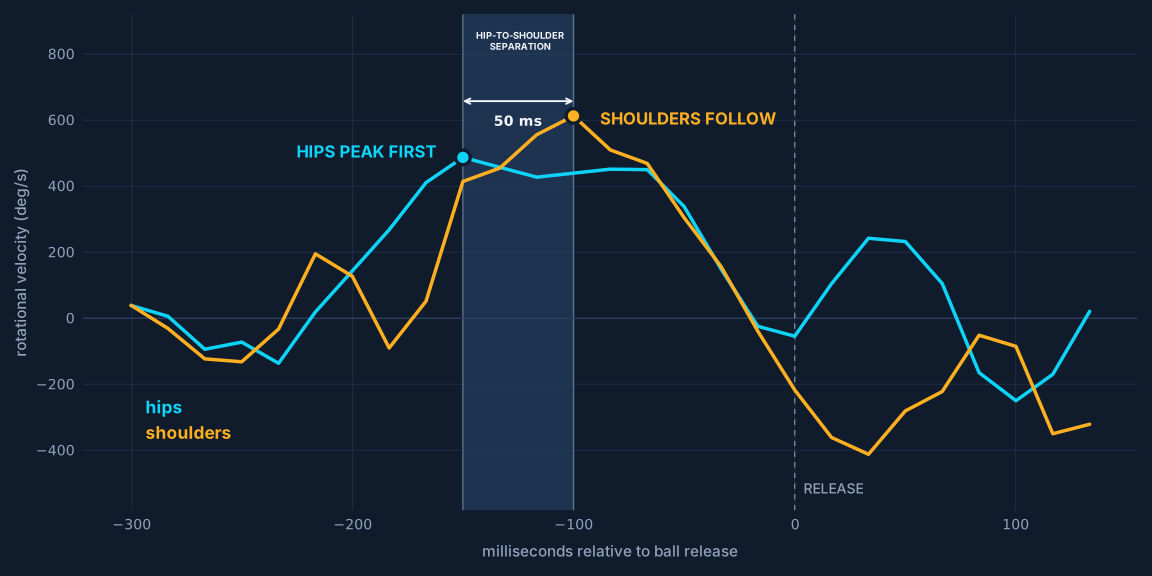
Hip-to-shoulder separation
In a well-sequenced throw the hips rotate first and the shoulders follow, and the separation between them is where velocity comes from. When they rotate together, the athlete is throwing with their arm alone — the most common power leak in the sport, and one of the most correctable.
How it's measured. Plot hip and shoulder rotational velocity on the same axes: the interval between the two peaks is the measurement, and the measurement is the verdict. A failed verdict selects four specific drills out of eighteen — prescribed by what was measured, not assembled from a template.
The measurement 59.94 FPS · hips lead by 3 frames